Jorgen Ellis and Tom Finn, founders of Strolll, faced a challenge: could they help Tom’s father, Nigel, make his way to the pub despite his Parkinson’s disease?
The solution they developed is now poised to transform the daily lives of millions living with the condition.
Parkinson’s disease is a progressive neurological disorder that severely impacts motor functions, particularly walking and balance.
Traditional therapies, such as cueing therapy — which uses visual and auditory prompts to bypass the pathways damaged by Parkinson’s — have shown promise in managing these symptoms. However, their use has been largely confined to clinical settings, limiting their accessibility for everyday situations.
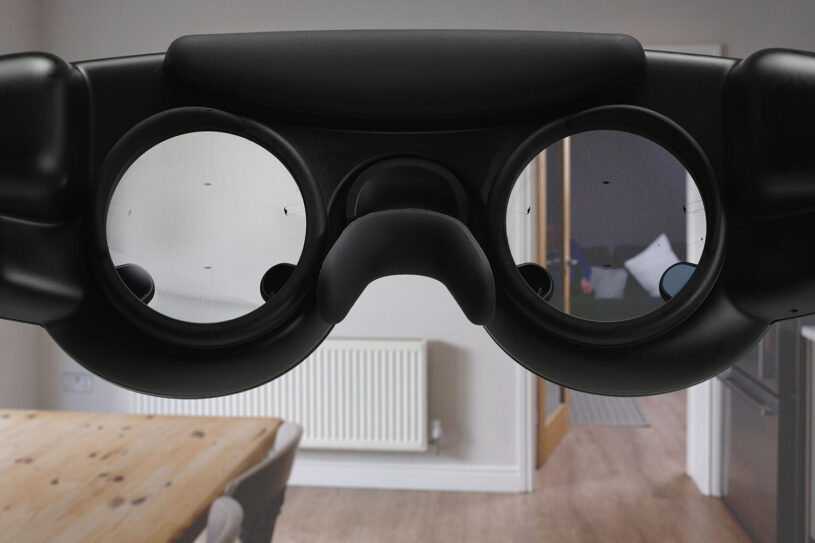
Strolll’s ground-breaking solution works by projecting real-time visual and auditory cues through special glasses which harness the power of artificial intelligence (AI) technology and augmented reality (AR) to bring these therapies into the daily lives of those affected.
“Tom’s dad would have problems walking down the hall, but when it came to climbing stairs, he had no problem — this is where cueing therapy can help. Parkinson’s is incredibly complex, affecting our human autopilot. Movements that most people don’t even think about — like walking and swallowing — are exactly what Parkinson’s impairs. The brain is amazing; it can control different movements, but you can’t just switch gears like you would in a car. So, we have to force the brain to do that with external stimuli.”
Jorgen Ellis, Co-founder, Strolll
The technology
Strolll’s ground-breaking solution to stimulate the brain in everyday settings for those affected by Parkinson’s was to develop software for AR glasses which they have called NavigAIt. It works by tailoring cues to each user’s specific needs using AI and machine learning.
As a person with Parkinson’s walks through their home or navigates public spaces, the software continuously assesses their gait, balance, and surrounding environment. It then provides the most effective cues — such as coloured lines or rhythmic sounds — to help them overcome symptoms like freezing or an unsteady gait.
“The interface itself is akin to a Heads-Up Display (HUD) in a self-driving car, guiding users toward their intended destination. We can use the technology built into the AR glasses you have on your head, and through that we can understand exactly where in the world you are, as well as what in the world is around you. Using real life feedback, the computer can then give you prompts to get there.”
Brent Poynton, Chief Technology Officer, Strolll
Strolll is experienced in the development of rehabilitation tools for those with Parkinson’s, and NavigAIt is the next leap in their existing rehabilitation products. NavigAIt offers an innovative, AI-driven solution that integrates seamlessly into daily life, surpassing previous applications which are either limited to clinical settings or designed to be therapeutic games accessed at home.
Impact and vision
Strolll’s ultimate goal is to empower people with Parkinson’s to live without the fear of mobility-related symptoms. Jorgen envisions a future where people can purchase AR glasses online or from their local telecom shop, choosing styles and aesthetics that suit their tastes.
The glasses are versatile, allowing users to check emails, watch TV and more. Users of NavigAIt would be indistinguishable from the general public, allowing them to discreetly manage symptoms and walk confidently in any setting without the anxiety of freezing or falling.
Partnerships and progress
Strolll’s success is bolstered by strong partnerships, including collaboration with Dr Melvyn Roerdink at Maastricht University in the Netherlands.
“Maastricht are providing the scientific expertise we need to run randomised control trials, recruit patients, conduct studies, and analyse the clinical effectiveness of our technology. Strolll combines this with our technological capabilities to develop machine learning products and the work to register medical devices.”
Samantha Richmond, Vice President of Quality and Regulatory Affairs, Strolll
The partnership has also provided Strolll with valuable insights into medical device regulations across the EU, paving the way for international expansion to countries like Germany, France, and eventually the US.
“Because our product results in people accessing our software through glasses there are, rightly, stringent regulations we need to adhere to, to show this product is safe for people to use.”
Samantha Richmond, Vice President of Quality and Regulatory Affairs, Strolll
From science fiction to reality
The technology for NavigAIt is in place. Strolll continues to work through the practicalities — such as how the software responds to environment impacts like people walking in front of users or uneven floors — before the product reaches people’s homes.
“With the advancements in AI, the progress in AR technology, and the growing acceptance of AR glasses, we’re at a pivotal point where we can make this technology and software available to people with Parkinson’s. The technology is all there, our job now is to get this software into people’s homes.”
Jorgen Ellis, Co-founder, Strolll